
Chirpy Sort: Bird Color Puzzle
AIM TOP GAME TECHNOLOGY LIMITED - BirdCasual
4.81.02K Reviews
- Version
- 1.4.0
- Installs
- 1.00M
- Age Rating
- Everyone
Screenshots
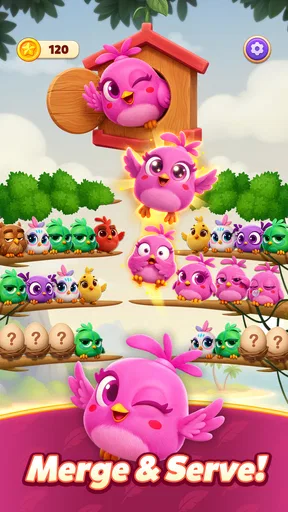
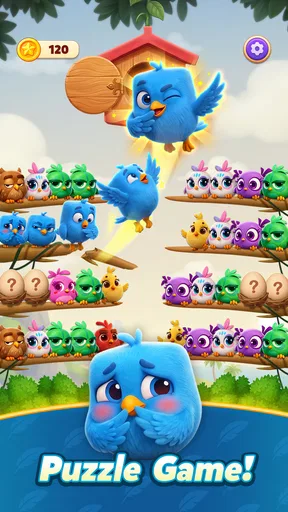
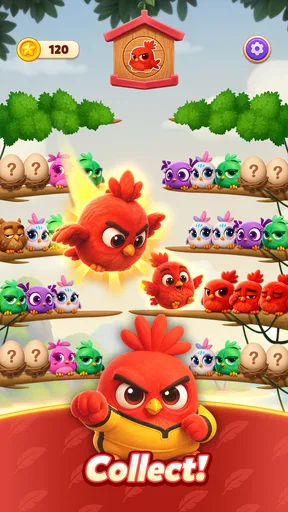
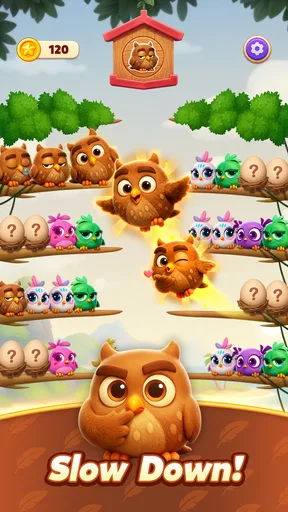
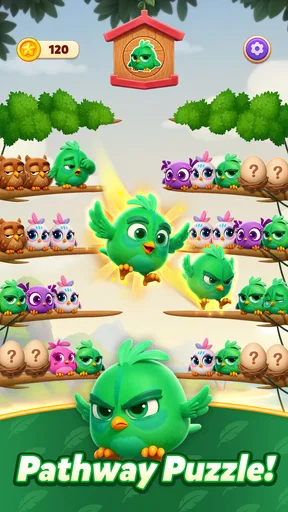
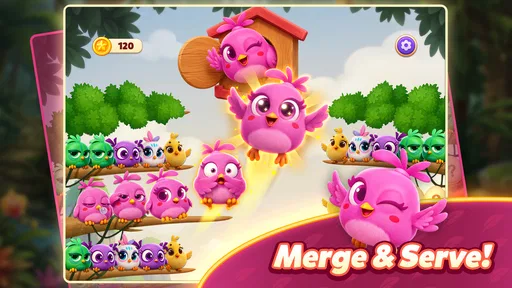
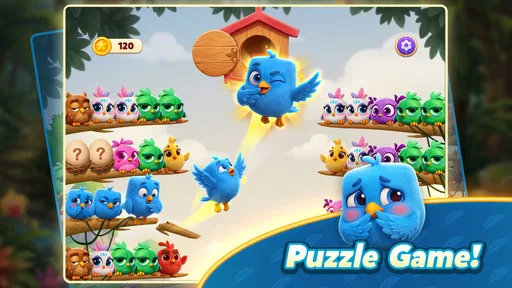
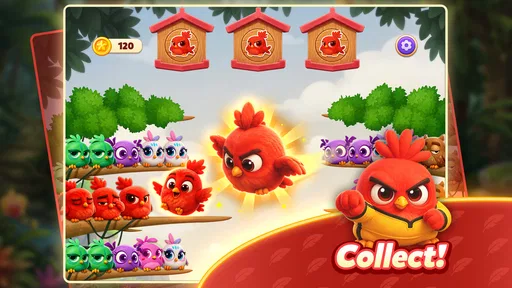
Our Review of Chirpy Sort: Bird Color Puzzle
 Analysis by Appyee
I spent time with Chirpy Sort: Bird Color Puzzle as a small, low-pressure sorting game, and its main appeal became clear quickly: it turns arranging colorful birds into a quiet little concentration exercise. The presentation is gentle, the bird sounds add personality, and the overall pace feels much closer to a relaxing break than a competitive challenge. If you enjoy casual puzzles that ask for attention without demanding a long session, this is an easy game to understand and pleasant to revisit.
The central idea is simple. Birds need to be organized by color, so each move is about reading the current arrangement, deciding where a bird belongs, and avoiding choices that make the next few moves awkward. That sounds modest, but the value is in the way a straightforward rule creates small planning decisions. I found myself switching between quick moves and more careful pauses depending on how crowded the arrangement became.
That focus on bird-color sorting gives the game a clear identity. It is not trying to overwhelm me with a large collection of systems or a complicated story. Instead, it keeps attention on visual order, soft colors, and the satisfying feeling of turning a mixed arrangement into something tidy. For me, that makes it especially suitable when I want a game that occupies my hands and mind without taking over my evening.
Why the sorting capability matters in everyday play
The strongest part of the experience is not simply that the birds have different colors. It is that color becomes a practical planning language. I can look at the board and immediately recognize which birds are likely to help open space and which ones are better left alone until another route becomes available. The game therefore rewards a little foresight, even though the rules remain approachable.
I noticed that the visual design does useful work. Cozy colors make the board easy to scan, while the bird shapes and chirps stop the pieces from feeling like anonymous blocks. That distinction matters during longer puzzle moments, because I am not staring at a harsh grid of identical symbols. The friendly presentation lowers the mental friction of retrying a difficult arrangement.
One useful habit is to avoid sorting only the bird that looks most convenient at the moment. I get better results when I first inspect the whole board and identify colors that are partly blocked. Moving a visible bird may be tempting, but it can also remove the space needed to complete another group. This is a small but meaningful shift from reacting to planning, and it is where the game becomes more engaging than a purely automatic matching toy.
Another practical insight is to treat open space as a resource. A move that does not immediately complete a color can still be worthwhile if it creates room for a later sequence. I found this especially helpful when several colors were competing for the same available positions. Thinking about space first, rather than chasing the most obvious match, made the puzzles feel more controlled.
The capability also works well for short sessions. I can play for a few minutes while waiting for an appointment or winding down before bed, then stop without feeling that I have abandoned a large adventure. That makes the game different from casual titles built around constant timers, rapid reactions, or a large daily commitment. Its appeal comes from the calmness of the decision-making rather than from pressure.
How the board feels when I play carefully
At first, I tend to make quick choices because the color groups look obvious. The more interesting moments arrive when a seemingly harmless move changes the available space. I then have to consider whether I am making progress or merely shifting the problem somewhere else. This gives the simple sorting format a mild puzzle tension without turning it into something intimidating.
I also like that the game can serve different moods. When I am tired, I can rely on the clear visual goal and make uncomplicated moves. When I want more involvement, I can slow down and plan several steps ahead. That flexibility is more valuable than it may sound: the same basic activity can feel like a soothing distraction or a focused logic exercise depending on how deliberately I approach it.
The cute audio presentation supports that flexibility. The chirps make successful movement feel more alive than silent tile swapping, but they do not change the underlying task. I would still recommend checking the sound level before playing in a quiet public place, particularly if I am using the game as a discreet waiting-room activity. The visual side carries the experience well, so the game remains understandable even when I choose not to rely on audio.
How it works in practice
My usual approach is to begin with a scan rather than an immediate move. I look for colors that already have a natural path toward completion and then check whether moving them would block a color that has fewer options. This takes only a moment, but it prevents the most common careless mistake: using a useful position too early.
When the arrangement becomes less obvious, I divide the problem into two questions. First, which bird can move without damaging the current structure? Second, which empty position will be most valuable after that move? This method keeps me from focusing too narrowly on the next match. It also makes failed attempts informative, because I can identify whether I misread a color group or spent space at the wrong time.
A good everyday workflow is to play one short session with sound enabled, then another with the phone muted if I need a quieter experience. The chirps add charm, but the game’s core feedback is visual enough for silent play. I also prefer turning off distractions around me rather than rushing through the board; the game is at its best when I give each arrangement a little attention.
The free entry point makes trying it straightforward. Chirpy Sort is available at no cost, while optional in-app purchases range from under a dollar to nearly a hundred dollars per item. That broad purchase range is worth keeping in mind before handing the phone to a child or allowing unrestricted spending. For my own use, I would treat the free version as the first test: the basic sorting idea should be enjoyable on its own before I consider buying anything.
The game is rated for Everyone, which matches the friendly visual direction and uncomplicated premise. I would still explain the purchase controls to younger players, not because the sorting activity feels unsuitable, but because an everyone-friendly game can still present purchase options. That is a practical point for families sharing a device.
Small techniques that improve the experience
I found three techniques particularly useful. The first is to identify the most constrained color before moving the easiest one. A color with limited access can determine the whole arrangement, while an easy group may remain available later. This prevents the board from becoming tidy in one area while quietly impossible in another.
The second is to leave a flexible space whenever possible. A position that can accept more than one color is more valuable than a position that works for only one immediate move. Preserving that flexibility gives me room to recover after a less-than-perfect decision and reduces the need to restart mentally after every mistake.
The third is to pause after a successful grouping instead of continuing automatically. Completing one color can change what is visible and what is reachable. Taking a brief look at the new layout helps me notice newly available options and keeps the game from becoming a chain of impulsive taps.
These are not complicated strategies, but they make the difference between simply moving birds around and understanding the puzzle structure. They also show why the game can hold attention beyond its first impression. The rules are easy to learn, yet the arrangement still rewards better habits.
The best scenario for this game
The clearest use case is a short transition in the day. I can imagine opening it on a bus ride, during a coffee break, or while waiting for someone who is running late. A typical session might begin with a quick board that helps me settle, followed by a more thoughtful arrangement that gives my attention somewhere constructive to go. I do not need to remember a story, coordinate with another player, or prepare a long strategy before starting.
It also suits people who like organizing activities. The pleasure comes from visual disorder becoming clean and understandable, so anyone who enjoys arranging objects, matching colors, or solving small logic problems may find the format naturally satisfying. The birds and soft presentation make it less severe than many traditional puzzle games, which can be useful when I want mental stimulation without an aggressive interface.
For families, the Everyone rating and simple premise make it approachable as a shared casual game. An adult can help a younger player think through the available space instead of simply taking over the board. I would use it as a conversation starter about planning: why is one move safe, and why might another move make the next step harder? That gives the game a little more value than passive tapping.
It is also a reasonable choice for players who are new to sorting puzzles. The main goal is understandable without learning a dense rulebook, and the color-based presentation communicates the task quickly. Someone who normally avoids logic games because they seem too technical may find this a softer entry point.
On the other hand, I would not choose it for a group gaming session or for someone who needs constant novelty. The experience is centered on one core activity, so its appeal depends on whether that activity remains enjoyable. Players looking for narrative progression, action, multiplayer competition, or a large variety of modes should look elsewhere. Chirpy Sort works because it stays focused, and that same focus limits its range.
Tradeoffs that become clearer over time
The calm design is a strength, but it can also feel too gentle if I am in the mood for urgency. There is no reason to expect the same adrenaline as a fast arcade game, and the sorting loop may seem repetitive to players who need frequent changes in goals. I appreciate the restraint, although I would not describe it as a universal casual recommendation.
The purchase structure deserves a measured look. The game is free to start, but the available optional items span a wide range, from $0.99 to $99.99 each. That does not automatically make the experience poor, yet it means I would review purchase settings before letting someone else play on my device. A free game can be relaxing for the player and still require sensible spending boundaries from the owner.
Another tradeoff is the balance between accessibility and depth. The color language is immediately readable, which helps newcomers, but players who want elaborate puzzle systems may eventually find the central idea narrow. I would compare it with more complex sorting or logic alternatives if I wanted layered rules, extensive customization, or a stronger sense of long-term mastery.
Compared with match-three games, this feels less dependent on rapid pattern recognition and more dependent on preserving useful space. Compared with traditional block puzzles, the birds give the board a warmer personality and the sorting objective is more explicit. Compared with idle casual games, it asks me to make actual decisions rather than simply collect progress in the background. Those differences help explain who will enjoy it: a player wanting calm planning will probably prefer this over reflex-heavy alternatives, while someone seeking constant rewards may not.
I also think the presentation sets an expectation that the game should remain comfortable and readable. If I play while distracted, I can make poor moves not because the rules are confusing, but because I am treating a planning puzzle like a tapping game. The best results come from giving it a few quiet seconds of attention. That is a minor demand, but it is central to the experience.
Who gains the most from the focused design
The strongest audience is anyone who wants a compact casual puzzle with a soft visual mood and enough planning to prevent it from becoming mindless. I would recommend it to commuters, families, casual logic fans, and people who like organizing colors more than chasing high-speed scores. It is particularly useful as a reset between demanding tasks because the board gives the mind one clear problem to hold.
Players who are sensitive to noisy or aggressive game design may also appreciate the calmer direction. The bird theme, cozy palette, and chirps make the activity feel friendly rather than clinical. I would still use headphones or mute the device when appropriate, but the audio-visual identity is one of the reasons this specific sorting game stands out from plain color puzzles.
The developer is AIM TOP GAME TECHNOLOGY LIMITED - Bird, and the game has built a strong store response, with an average rating of 4.8 from around 53K ratings and more than 1M installs. Those figures do not replace personal taste, but they suggest that the approachable format has connected with a substantial audience. The current version is 1.4.0, and it runs on Android 6.0 or later, so compatibility should be practical for many older devices as well as newer ones.
I would skip it if my priority were deep narrative, competitive multiplayer, demanding tactical systems, or a large variety of activities in one package. I would also hesitate if I dislike repeating a single puzzle concept or if the presence of optional purchases would be distracting. In those cases, a premium puzzle game with one upfront cost or a broader strategy title may fit better.
For everyone else, my recommendation is to approach it as a focused break rather than an endlessly varied game. Start with the free experience, pay attention to how much you enjoy planning around open space, and set purchase protections before sharing the device. If the simple act of turning a mixed group of birds into an orderly arrangement feels satisfying, the game has enough personality to make that small pleasure worth returning to.
My final impression is favorable because the game understands its own scale. It does not need a complicated premise to be useful; it gives me a clear color problem, a pleasant setting, and a reason to slow down for a few minutes. Its real strength is the calm concentration created by sorting before moving, not the promise of endless variety. As a free casual game, it is an inviting choice for quiet puzzle sessions, provided I am comfortable with its narrow focus and keep the optional purchase range in mind.
Verdict
Strengths of Chirpy Sort: Bird Color Puzzle
- Simple color-sorting rules are easy to understand from the first level.
- Short puzzles make it suitable for quick breaks or casual play.
- Bird-themed visuals give the game a cheerful, relaxing atmosphere.
- Gradually harder layouts provide a gentle challenge for puzzle fans.
- One-handed controls work well on phones and smaller screens.
Limitations of Chirpy Sort: Bird Color Puzzle
- Later puzzles can feel repetitive once the sorting pattern becomes familiar.
- Mistakes may require careful planning rather than quick moves.
- Small bird stacks can be harder to distinguish on compact displays.
- Progress may feel slow for players seeking fast-paced gameplay.
- Some features or content may depend on ads or in-app purchases.
Similar Picks in This Category
View All
My Talking Angela
Outfit7 Limited4.2

My Talking Tom
Outfit7 Limited4.3

Pou
Zakeh4.2

My Talking Tom 2: Pet Game
Outfit7 Limited4.3

Candy Crush Saga
King4.6

Bridge Race
Supersonic Studios LTD4.1
Frequently Asked Questions
What is Chirpy Sort: Bird Color Puzzle and how is it played?
Chirpy Sort: Bird Color Puzzle is a casual sorting game based on arranging colorful birds into matching groups. You move birds between branches, perches, or containers and try to place birds of the same color together. Each level starts simply, but later puzzles introduce more birds, limited spaces, and trickier arrangements that require planning before every move.
Is Chirpy Sort: Bird Color Puzzle suitable for children and casual players?
The game is generally easy to understand because it uses simple tap-and-move controls and familiar color-matching mechanics. It can be suitable for children and casual players, although younger users may need help with more difficult levels. Parents should also review the game’s age rating, advertising settings, and any in-app purchase options before allowing children to play.
Does Chirpy Sort: Bird Color Puzzle require an internet connection?
Many sorting puzzles can usually be played offline after the game has been installed, which makes Chirpy Sort: Bird Color Puzzle convenient for travel or areas with limited connectivity. However, an internet connection may still be needed for advertisements, bonus rewards, updates, cloud features, or purchases. Availability of offline functions can vary by device and app version.
Are there advertisements or in-app purchases in Chirpy Sort: Bird Color Puzzle?
As with many free-to-download mobile puzzle games, Chirpy Sort: Bird Color Puzzle may include advertising and optional in-app purchases. Ads can potentially appear between levels or when you choose to receive extra hints and rewards. Purchases may provide boosters, additional moves, or an ad-free experience, so check the store listing and purchase settings before playing.
What should I know about difficulty, hints, and progress before downloading?
The early stages are designed to teach the sorting rules, while later levels require careful planning because a poorly chosen move can block useful spaces. Depending on the version, hints, undo options, or extra containers may help when you are stuck, but these features can be limited or connected to rewards. Progress and saved data may also depend on the device or account.
Play our best games!


